
In today’s digital world, customers expect instant answers. Whether they’re shopping online, comparing services, or researching a company, people want accurate information without waiting for an email response or phone call.
That’s why a well-structured Frequently Asked Questions (FAQ) page has become an essential part of every modern website.
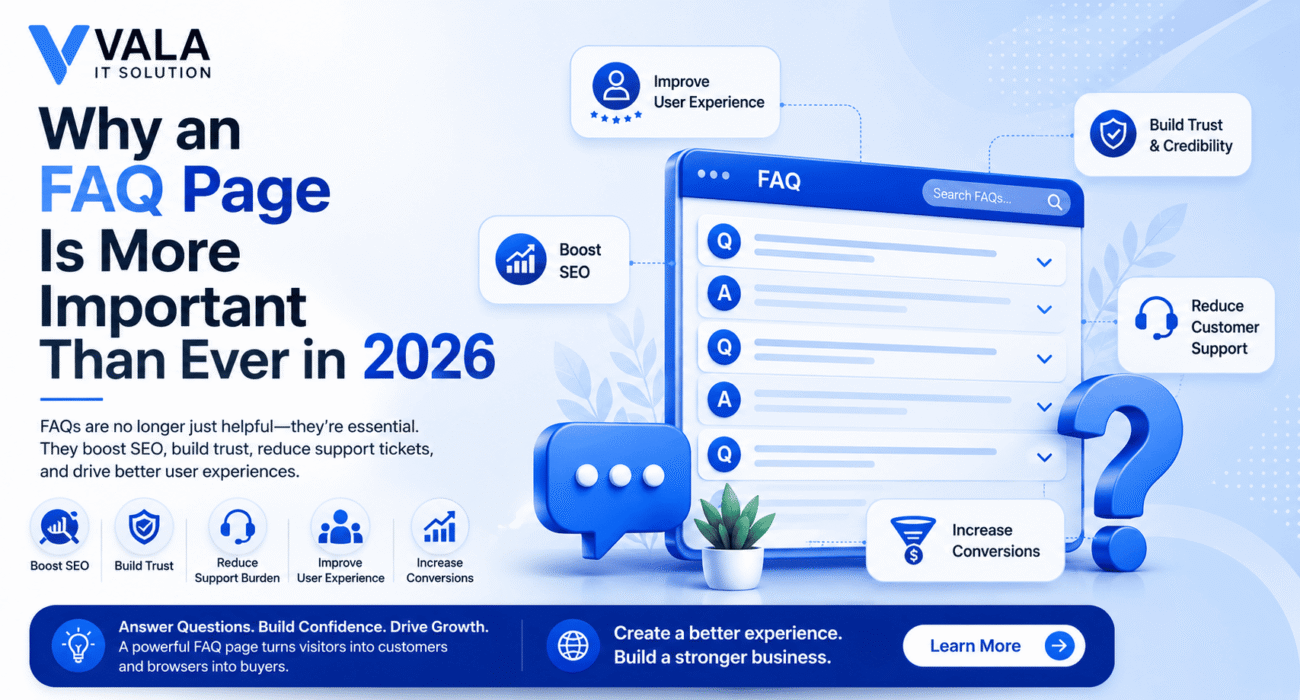
An effective FAQ section does much more than answer common questions—it improves user experience, boosts SEO, builds customer trust, reduces support requests, and even increases conversions. In 2026, with AI-powered search and conversational experiences becoming the norm, FAQs play an even bigger role in helping businesses connect with their audience.
Why Every Website Needs an FAQ Page
An FAQ page acts as your always-available customer support representative. It provides visitors with immediate answers to the questions they ask most often, helping them make decisions faster.
Instead of contacting your support team or leaving your website to search elsewhere, users can quickly find the information they need—all in one place.
This creates a smoother customer journey while improving overall satisfaction.
Deliver Instant Answers
Modern consumers value speed and convenience.
Whether someone wants to know about pricing, delivery times, payment options, or return policies, they expect answers within seconds.
A comprehensive FAQ section helps visitors:
- Find information quickly
- Reduce uncertainty before purchasing
- Make informed decisions
- Complete purchases with confidence
Providing immediate answers removes friction from the buying process and keeps potential customers engaged.
Improve Your Search Engine Rankings
FAQ pages are excellent for Search Engine Optimization (SEO).
Most FAQ questions naturally match the way users search online.
For example:
- How much does website development cost?
- Do you provide Shopify customization?
- How long does delivery take?
- Is WordPress better than Shopify?
These conversational searches align perfectly with modern search engines and AI-powered assistants.
By answering these questions clearly, your website has a better chance of appearing in:
- Google Search
- AI-powered search results
- Featured snippets
- “People Also Ask” sections
- Voice search results
Adding structured FAQ schema can further improve your visibility in search engines.
Reduce Customer Support Workload
Many customer inquiries involve the same questions repeatedly.
An FAQ page allows visitors to solve simple problems themselves without contacting your support team.
Common topics include:
- Shipping information
- Refund policies
- Payment methods
- Service pricing
- Account setup
- Delivery timelines
By answering these questions proactively, your support team can focus on more complex customer issues while reducing response times.
Build Trust and Credibility
Transparency builds confidence.
When businesses openly answer common questions about pricing, policies, products, and services, customers are more likely to trust them.
A detailed FAQ section demonstrates that you understand your customers’ concerns and are committed to providing helpful, honest information.
Rather than avoiding difficult questions, addressing them directly helps establish credibility and strengthens your brand reputation.
Enhance User Experience
A well-organized FAQ page makes your website easier to navigate.
Instead of searching through multiple pages, visitors can quickly locate answers in one centralized location.
Good FAQ pages are:
- Easy to browse
- Clearly categorized
- Mobile-friendly
- Searchable
- Simple to understand
This improves the overall user experience and encourages visitors to stay on your website longer.
Increase Conversion Rates
Many potential customers hesitate before making a purchase because they have unanswered questions.
An FAQ page can address concerns such as:
- Product specifications
- Service inclusions
- Pricing
- Delivery options
- Warranty information
- Cancellation policies
Removing these uncertainties helps customers feel more confident, making them more likely to complete a purchase or submit an inquiry.
Support AI-Powered Search in 2026
Search behavior is changing rapidly.
Instead of typing short keywords, users now ask complete questions using AI assistants and conversational search platforms.
For example:
- “Which website platform is best for a small business?”
- “How much does Shopify website development cost?”
- “Can WordPress handle eCommerce?”
Well-written FAQ content aligns naturally with these conversational searches.
AI-powered search engines also rely on structured, trustworthy content when generating responses, making FAQs more valuable than ever.
Best Practices for Creating Effective FAQs
To maximize the value of your FAQ page, follow these recommendations:
Answer Real Customer Questions
Use questions gathered from:
- Customer support tickets
- Sales calls
- Live chat conversations
- Emails
- Social media messages
These represent the information your audience genuinely wants to know.
Organize Questions by Category
Group related topics together, such as:
- General Information
- Pricing
- Orders
- Payments
- Shipping
- Technical Support
- Returns
- Account Management
A logical structure makes navigation much easier.
Keep Answers Clear and Concise
Avoid overly technical language.
Provide straightforward answers that solve the user’s problem quickly.
If additional information is needed, include links to more detailed pages.
Update FAQs Regularly
Your business evolves over time.
Review your FAQ page periodically to:
- Remove outdated information
- Add new questions
- Update policies
- Reflect new products or services
Fresh content also benefits SEO.
Make FAQs Searchable
For larger FAQ sections, include an internal search feature so visitors can locate answers instantly.
Use Structured Data
Implement FAQ Schema markup where appropriate to help search engines better understand your content.
Structured data can improve visibility and support enhanced search results.
Common FAQ Topics Every Business Should Cover
Depending on your business, consider including questions about:
- Products or services
- Pricing
- Payment methods
- Delivery timelines
- Shipping costs
- Refund policy
- Technical support
- Contact information
- Account creation
- Security and privacy
The more relevant questions you answer, the easier it becomes for customers to make informed decisions.
Final Thoughts
An FAQ page is far more than a collection of common questions—it’s a valuable business asset that enhances customer experience, strengthens SEO, reduces support costs, and helps convert visitors into customers.
As AI-driven search, voice assistants, and conversational interfaces continue to shape how people find information in 2026, businesses that provide clear, structured answers will have a significant advantage.
Investing time in building and maintaining a comprehensive FAQ section is one of the simplest yet most effective ways to improve your website’s performance and customer satisfaction.
At Vala IT Solution, we help businesses create high-performing websites that are optimized for users, search engines, and the future of AI-powered search. Whether you’re launching a new website or improving an existing one, a thoughtfully designed FAQ section can make a measurable difference in your online success.