
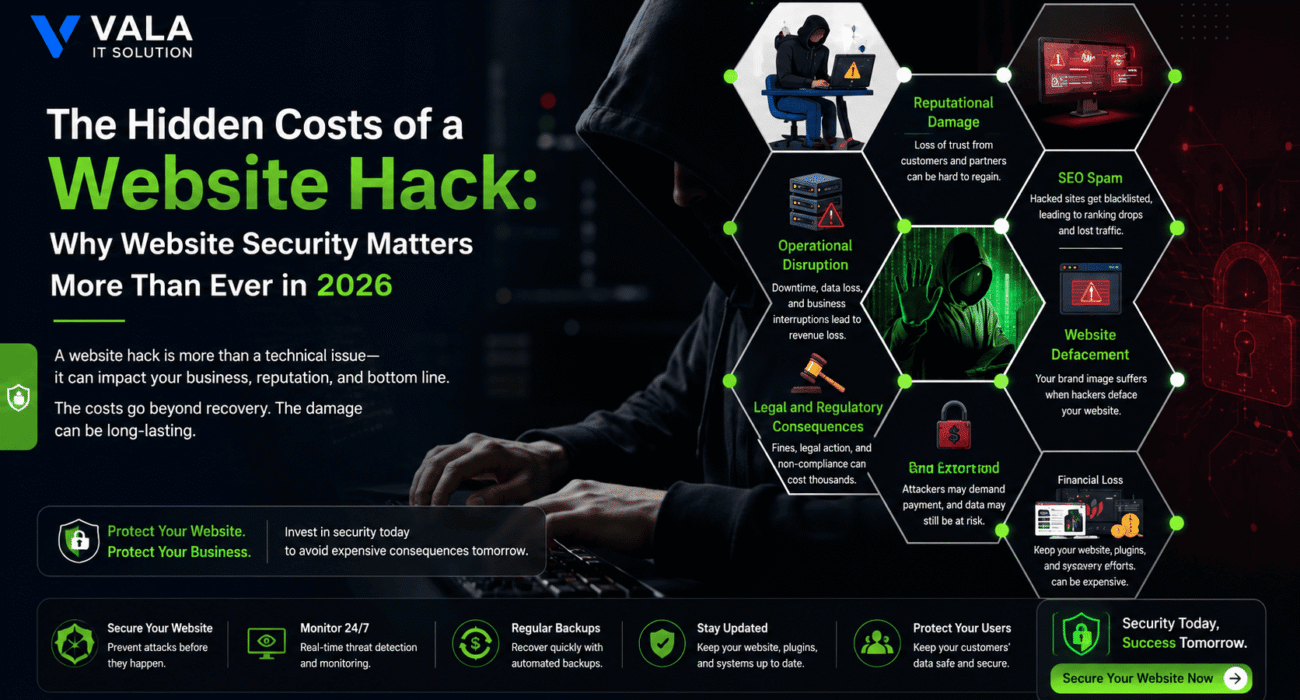
Your website is one of your business’s most valuable digital assets. It represents your brand, generates leads, processes customer data, and often serves as your primary sales channel. But as cyber threats become increasingly sophisticated, websites of all sizes are becoming attractive targets for hackers.
Many business owners believe cybercriminals only target large corporations. In reality, small and medium-sized businesses are frequently attacked because they often have weaker security measures in place.
A successful website breach can cause far more than temporary downtime—it can damage your reputation, interrupt operations, compromise sensitive data, and result in significant financial losses.
Let’s explore the biggest risks of a hacked website and how you can protect your business.
1. Damage to Your Business Reputation
Trust is one of the most valuable assets a business can build.
If customers discover your website has been hacked, they may question whether their personal information is safe.
A security breach can lead to:
- Loss of customer confidence
- Negative online reviews
- Reduced brand credibility
- Lower customer retention
- Difficulty attracting new clients
Rebuilding trust often takes much longer than fixing the technical problem.
2. Website Downtime and Business Disruption
Hackers often target websites to disrupt normal business operations.
Common attacks include:
- Distributed Denial-of-Service (DDoS) attacks
- Server crashes
- Website malware
- Database corruption
If your website becomes unavailable, customers may be unable to:
- Browse products
- Place orders
- Submit inquiries
- Access customer accounts
Every minute of downtime can translate into lost revenue and missed business opportunities.
3. Website Defacement
Some attackers replace your website content with their own messages, images, or propaganda.
Website defacement can:
- Damage your professional image
- Confuse visitors
- Spread false information
- Harm customer confidence
Even after restoring the website, screenshots and cached versions may continue circulating online.
4. SEO Spam and Search Engine Penalties
Hackers frequently inject spam pages, hidden links, or malicious code into compromised websites.
These attacks may:
- Create thousands of spam pages
- Redirect visitors to harmful websites
- Inject pharmaceutical or gambling content
- Display malicious advertisements
Search engines may eventually:
- Lower your rankings
- Remove pages from search results
- Display security warnings
- Blacklist your website
Recovering SEO performance after a hack can take weeks or even months.
5. Theft of Sensitive Business and Customer Data
One of the most serious consequences of a website breach is data theft.
Hackers may gain access to:
- Customer information
- Email addresses
- Passwords
- Payment records
- Business documents
- Employee information
- Intellectual property
Stolen data can lead to identity theft, fraud, and significant financial and legal consequences.
6. Financial Losses
Cyberattacks often result in both direct and indirect financial damage.
Businesses may face expenses related to:
- Website recovery
- Emergency security services
- Data restoration
- Legal assistance
- Customer notifications
- Revenue loss during downtime
- Increased cybersecurity investments
For eCommerce businesses, even a few hours of downtime can lead to substantial lost sales.
7. Ransomware Attacks
Some attackers encrypt website files and demand payment to restore access.
Victims are typically asked to pay cryptocurrency in exchange for a decryption key.
Unfortunately:
- Payment does not guarantee recovery.
- Files may remain inaccessible.
- Attackers may demand additional payments.
Maintaining secure backups is one of the best defenses against ransomware.
8. Unauthorized Use of Your Server
Hackers sometimes use compromised websites for illegal activities without the owner’s knowledge.
Your server may be used to:
- Send spam emails
- Host phishing pages
- Store illegal files
- Launch cyberattacks
- Mine cryptocurrency
These activities consume server resources, slow your website, and may even result in hosting suspension.
9. Legal and Compliance Risks
Businesses that collect customer information have legal responsibilities to protect it.
A data breach may result in:
- Regulatory investigations
- Financial penalties
- Legal claims
- Mandatory breach notifications
- Compliance violations
Depending on your location and industry, regulations such as GDPR or other privacy laws may impose significant obligations after a security incident.
10. Long-Term Customer Impact
Customers affected by a security breach may permanently lose confidence in your business.
Common outcomes include:
- Cancelled subscriptions
- Reduced repeat purchases
- Lower customer loyalty
- Increased refund requests
- Negative word-of-mouth
Protecting customer information isn’t just a legal responsibility—it’s essential for maintaining long-term business relationships.
Common Signs Your Website May Have Been Hacked
Watch for warning signs such as:
- Unexpected redirects
- Slow website performance
- Unknown administrator accounts
- Spam pages appearing in search results
- Security warnings from browsers
- Unusual server activity
- Files changing without authorization
- Sudden drops in website traffic
Early detection can significantly reduce the impact of a cyberattack.
How to Protect Your Website
While no website is completely immune, following security best practices greatly reduces your risk.
Keep Software Updated
Regularly update:
- WordPress core
- Themes
- Plugins
- CMS platforms
- Server software
Security updates often fix known vulnerabilities before attackers can exploit them.
Use Strong Authentication
Protect administrator accounts with:
- Strong passwords
- Multi-Factor Authentication (MFA)
- Passkeys where supported
- Limited login attempts
Restrict admin access to trusted users only.
Install a Web Application Firewall (WAF)
A WAF helps block malicious traffic before it reaches your website.
It can protect against:
- SQL injection
- Cross-site scripting (XSS)
- Brute-force attacks
- Bot traffic
- DDoS attacks
Schedule Regular Backups
Maintain automated backups of:
- Website files
- Databases
- Media uploads
- Configuration settings
Store backups securely in multiple locations so they can be restored quickly if needed.
Monitor Your Website
Continuous monitoring helps identify suspicious activity before it becomes a major problem.
Monitor:
- Uptime
- Malware
- Login attempts
- File changes
- Server activity
- Security alerts
Proactive monitoring significantly improves incident response times.
Create an Incident Response Plan
Every business should have a plan for responding to security incidents.
Your response plan should include:
- Isolating compromised systems
- Restoring clean backups
- Changing passwords
- Notifying affected users if necessary
- Investigating the source of the breach
- Strengthening security measures to prevent future attacks
Preparation can dramatically reduce recovery time and business disruption.
Final Thoughts
Website security is no longer optional—it’s a critical part of running a successful online business. Cyber threats continue to evolve, and businesses of every size are potential targets.
Investing in proactive security measures, regular maintenance, reliable backups, and continuous monitoring helps protect your website, your customers, and your reputation.
At Vala IT Solution, we provide comprehensive website security services, including malware removal, WordPress security hardening, SSL implementation, firewall configuration, regular maintenance, backup management, and performance monitoring. Whether you operate a business website, eCommerce store, or custom web application, our team can help safeguard your digital assets and keep your website secure in 2026 and beyond.